What Is Where Winds Meet Actually About?
A lot of players downloaded Where Winds Meet because they thought it was just another cool martial arts game. They got dropped into ancient China and immediately felt like they missed something. They end up confused because, not only is the world massive, but the systems are layered, NPCs are talking about honor codes and factions and martial arts disciplines. And you're just trying to figure out why and how you got one-shot by a goose. Don’t worry. I’ll explain.
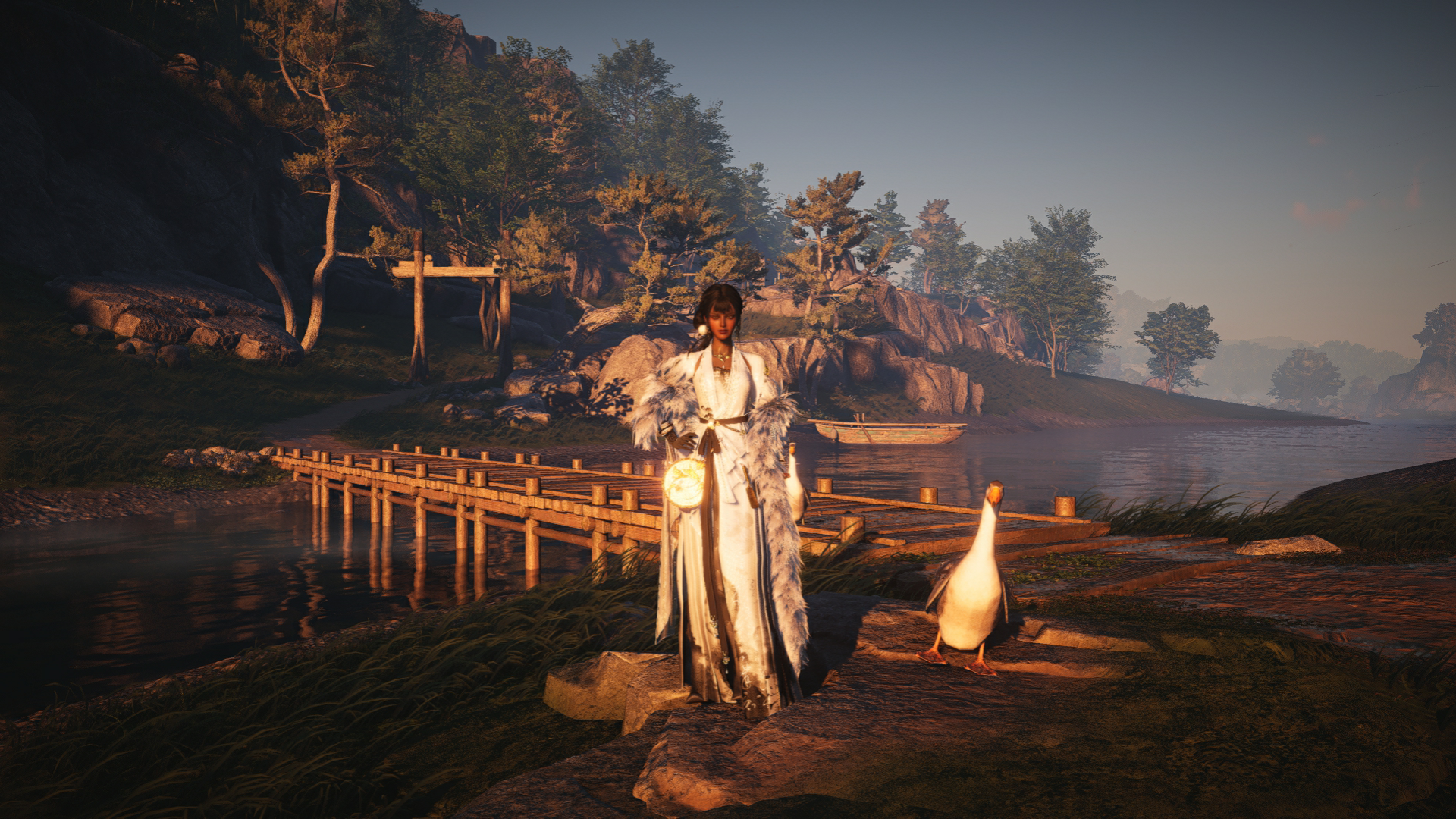
My character and the sick goose in Qinghe
So, What Kind of Game Is Where Winds Meet?
Where Winds Meet is a wuxia open-world RPG developed by Everstone Studio and published by NetEase. It launched globally on November 14, 2025, on PC, PlayStation 5, and mobile. It is free to play, and there is no pay-to-win. Every bit of combat strength you earn comes from actually playing the game.
But what makes it different from every other open-world RPG you've played is this: Where Winds Meet is not just inspired by Chinese history and culture. It is Chinese history and culture. The world, the systems, the factions, the martial arts, the wildlife—it is all rooted in China’s very real history and culture. And once you understand what that foundation is, the game transforms from a beautiful but confusing world into something awe-inspiring and alive.
The Historical Setting
Where Winds Meet is set during one of the most turbulent turning points in Chinese history: the end of the Five Dynasties and Ten Kingdoms period and the rise of the Song Dynasty.
Here's the short version of what that means: For roughly 53 years between the fall of the Tang Dynasty and the establishment of the Song Dynasty, China had no stable central government. Five different dynasties rose and fell in rapid succession. Warlords held power. Loyalties shattered. The country was fractured into competing kingdoms, each with its own rulers, armies, and ideals.
It is the perfect backdrop for a game built around the Jianghu. But the Jianghu is much older than this moment in history.
The term “jianghu” was first coined by the Taoist philosopher Zhuangzi as far back as the 4th century BCE. In Zhuangzi's writing, the Jianghu was not a place of swords and martial arts. It was a spiritual realm, a space far removed from the suffocating politics of court life—a place where a person could live freely and be fully true to themselves. The word itself translates roughly to "rivers and lakes," and that image captures the original meaning well: something vast, ungoverned, and beyond the reach of power.
It was during the Song and Yuan dynasties that the Jianghu transformed into something closer to what Where Winds Meet depicts. The classic novel Water Margin, known in Chinese as Shuihu Zhuan, canonized the idea of a fraternal outlaw society operating outside the law and beyond the reach of the imperial court. Wandering heroes. Brotherhood forged outside official structures. Honor systems that answered to no emperor. That vision of the Jianghu became the foundation of an entire literary and cultural tradition, and it is the version that Where Winds Meet is built on.
So, when your character steps into the Jianghu in Where Winds Meet, they are stepping into something that carries almost two thousand years of meaning. A space that began as a philosopher's vision of freedom and became, over centuries, the home of every wandering hero who ever chose their own code over the emperor's law.
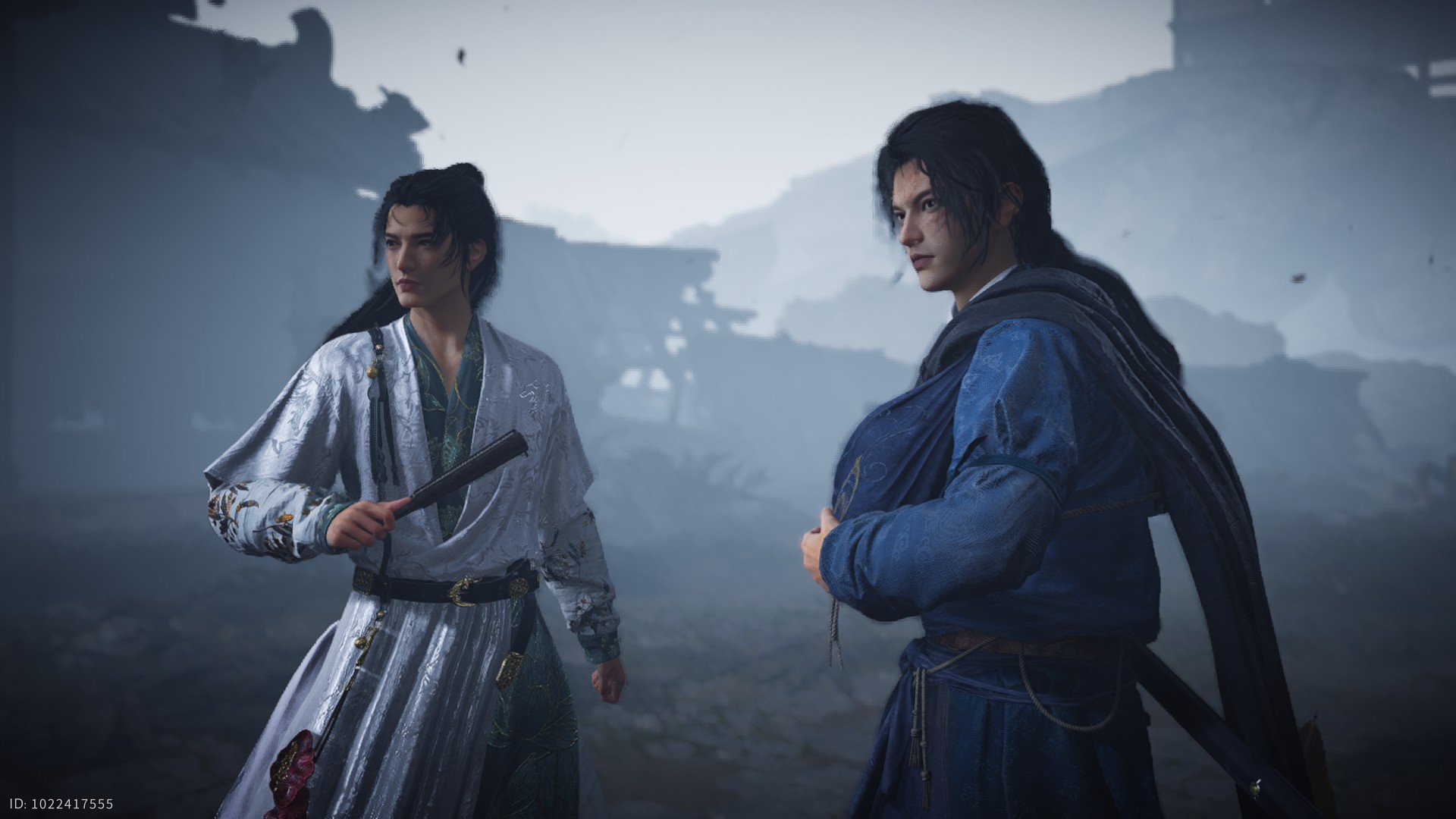
Chen Zixi, left, Uncle Jiang Yan/Jiang Wulang
Who Are You in This World?
The game opens with a scene you won't forget. A man in white, Chen Zixi, Mister Jade Hill approaches Uncle Jiang Yan who is carrying a baby. That baby is you. Shortly after they are attacked and flee assassins.
You grow up under Uncle Jiang’s protection, and the game drops you into character creation shortly after. You choose your appearance, your name, and begin your journey as a wanderer in Jianghu with no sect, no allegiances, and a past that is slowly unraveling around you.
Your character is not a chosen hero. You are not destined to save the world in the traditional sense. You are a wanderer, shaped by the choices you make, the sect you join or don't join, the skills you learn, the people you help or turn away from. The game asks a quiet but persistent question throughout: In a broken world, who do you choose to be? This question plays out in every quest, every faction interaction, every moral choice the game puts in front of you.
What Is the Jianghu, and Why Does It Matter?
The Jianghu in Where Winds Meet functions as both the setting and the social system of the game. Think of it as a world within a world, one that operates by its own rules, separate from the imperial court and the government.
In Jianghu, reputation matters more than rank. How you treat strangers, whether you keep your word, how you respond to injustice. It all shapes who you are in the eyes of the world. The game's emphasis on honor, promises, and codes of conduct is not just flavor text. It reflects the real philosophical framework of wuxia, the literary and cultural tradition the game draws from.
The central tension in Where Winds Meet is the conflict between the free, individualistic Jianghu and the new centralized order the Song Dynasty is trying to establish. The factions you encounter aren't simply good guys and bad guys. They are different answers to a real historical question: When the world is broken, do you serve the state, your community, or your own ideals? Your character has to navigate that tension and how you do it is up to you.
The Sects
In wuxia tradition, sects are not just organizations. They are ways of life, shaping how you fight, how you move through the world, and what you stand for in the Jianghu. Where Winds Meet honors that tradition fully.
Each sect in the game comes with a unique weapon, its own martial arts, and a strict code of precepts — 戒律 — that members are expected to live by. Your sect is an identity you adopt, with real rules attached to it.
For example, the Well of Heaven champions righteous justice and forbids harming fellow disciples. The Midnight Blades walk the Asura Path and reward players for defeating others in PvP combat. The Silver Needle sect requires members to charge for every healing service rendered and earn likes from other players. The Raging Tides operates on a principle of "wine is blood, wine is faith" — members must maintain a certain level of intoxication or face penalties. The Masked Troupe, rather than centering combat at all, is built around artistic performance and music.
Stay sectless and you avoid all restrictions, but you also miss out on the exclusive rewards and identity that come with committing to a path. Break your sect's precepts and you risk losing reputation or being expelled entirely.
The Martial Arts System
Here's the thing about combat in Where Winds Meet: you can button-mash your way through early fights. But if that's all you do, you're missing the entire point of the game.
This isn't a game where you unlock a skill tree and call it a day. Your weapon isn't just a stat stick; it's part of your personality. Swords feel elegant, almost dance-like. The fan feels like a wandering scholar's companion: refined, the kind of weapon you'd expect someone to gesture with while reciting poetry. Then you catch one to the face and realize, “oh, that healer can absolutely mess you up.” The umbrella? The umbrella looks romantic, delicate, and almost fragile. Then you take it into PvP and learn that romance is dangerous. And the rope dart? Pure glorious chaos with wide arcs and unpredictable angles, the kind of weapon that makes you feel like you're breaking the rules (and opponents complain about them quite often, too). And yes, the martial arts in the game are based on real martial arts of ancient China.
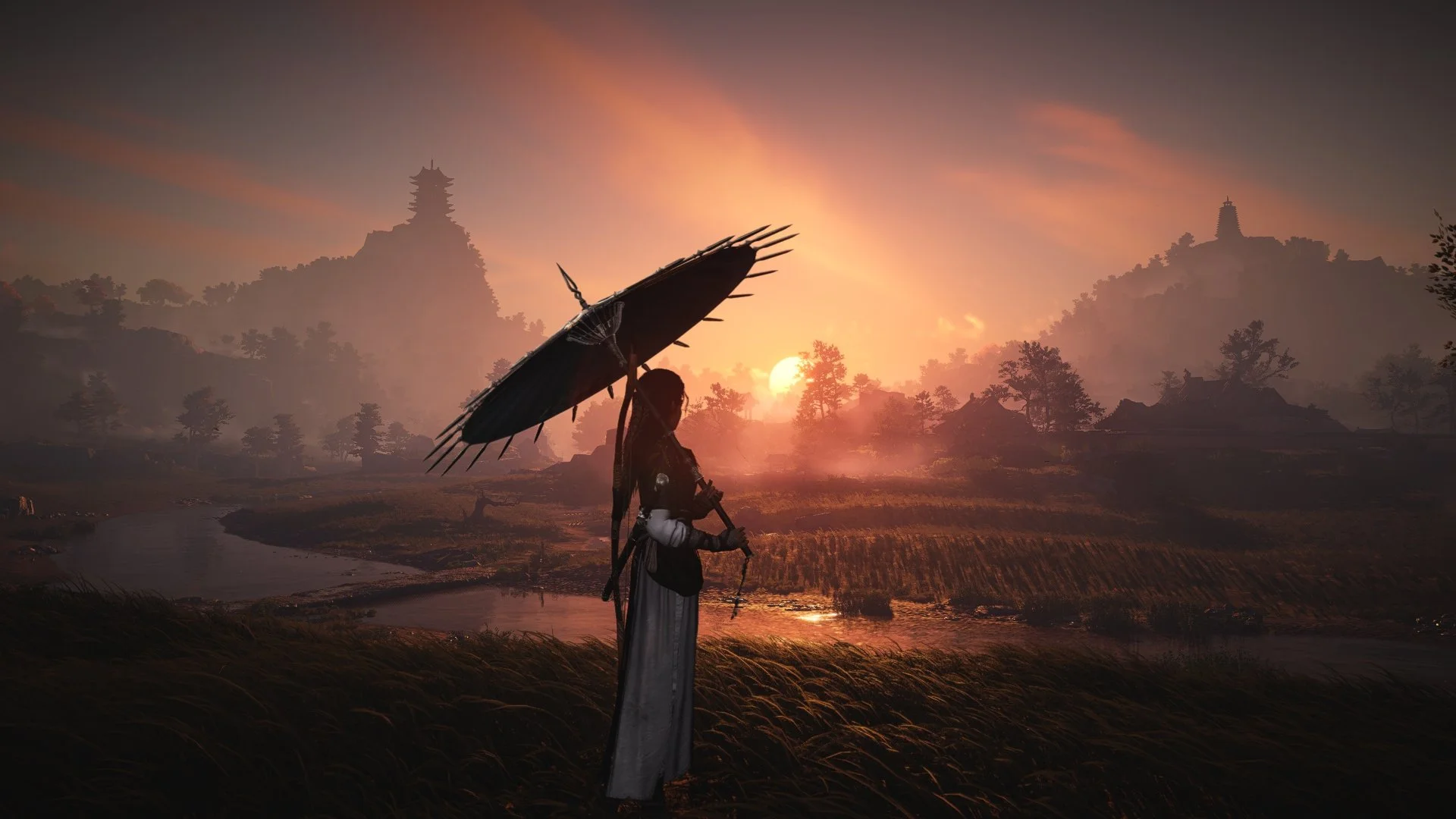
My WWM character with her umbrella
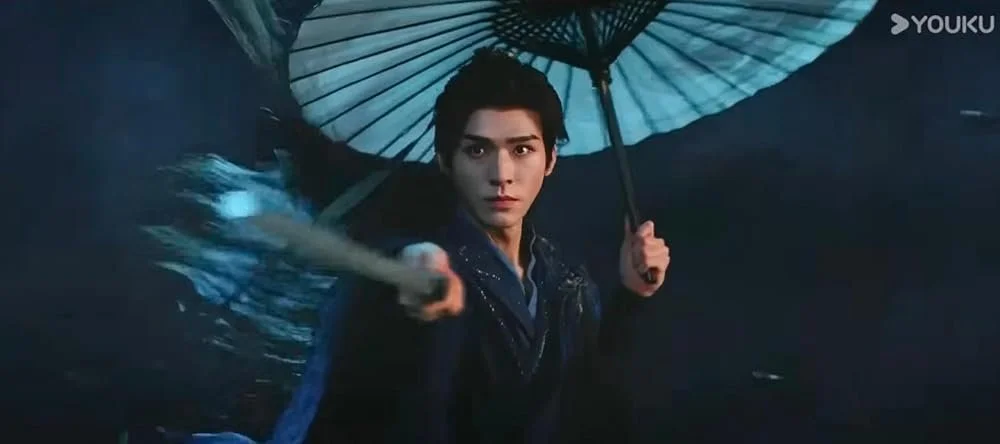
Su Muyu in “Blood River” uses an umbrella with hidden sword
Your techniques aren't bought from a vendor. You find them tucked inside a forgotten temple, hidden in the ruins of an old watchtower, or given to you by a stranger you helped on a dusty road. Your build grows organically, the way a wandering martial artist's would—through curiosity, exploration, and kindness.
That's not an accident. In wuxia tradition, martial arts are never just fighting. They're philosophy. Discipline. Self-expression. Where Winds Meet treats them that way.
The movement system follows the same logic. That air dash you've been using? It’s more than just a double jump. It's Qinggong, the lightness skill, that lets heroes in wuxia dramas run across water and leap between rooftops like it's nothing. It's not just traversal. It's your character aura farming. And honestly? It feels exactly like stepping into one of those old Shaw Brothers films.
The World Beyond Combat
What gets a lot of players is Where Winds Meet is not primarily a combat game. Sure, combat is large part of it, and it's very good. But the game is built around the idea that you are a person living in Jianghu, part of a larger story. You’re not just a fighter passing through it. A lot of the stories center around the impact that “the little guy” can have.
You can choose a profession. Become a healer and work your way up toward the rank of Divine Healer (神医, Shén Yī), which is the highest title, reserved for those who master both skill and compassion. Or become a scholar.
You can build a home in the wilds or rent housing in the city. You can join a guild or wander alone. You can stumble into a game of pitch pot or find a hidden temple that teaches you a rare fighting technique.
The game rewards slowness. Curiosity. Wandering without a destination. It is built for the kind of player who stops to admire a sunset and ends up discovering something they never expected.
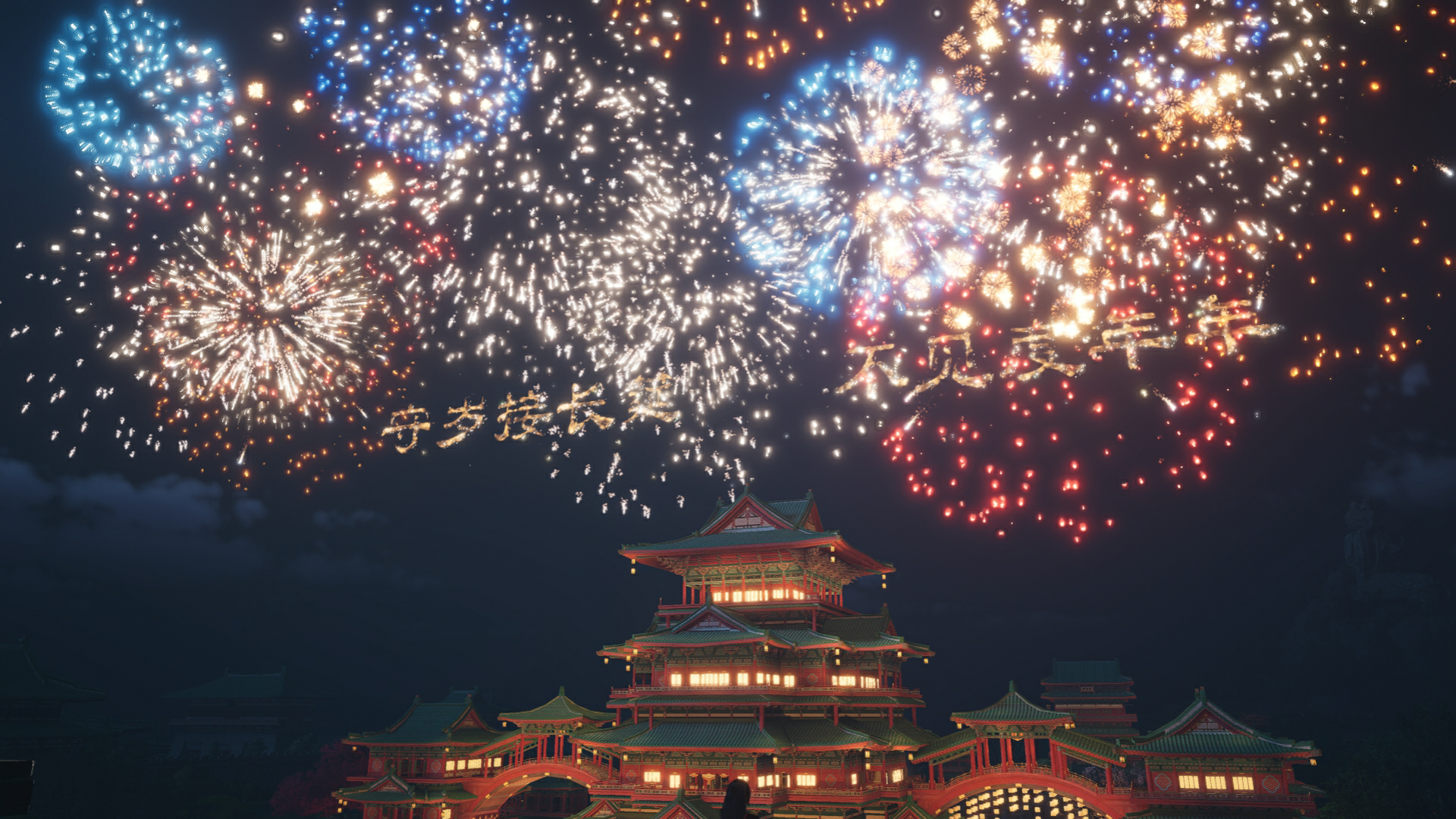
Nightly fireworks in Kaifeng
Why Does This Game Feel Different?
While most games use culture as decoration, Where Winds Meet uses culture as structure.
The geese that keep attacking you? In Chinese tradition, the wild swan goose (Hongyan, 鸿雁) is a symbol of loyalty and trustworthiness. The game made them fierce and territorial on purpose because they are living symbols of righteous defense. Even the wildlife is doing something.
The martial arts move names aren't just cool-sounding labels. "Flying Gourds" and "Drunken Poets" are references to Daoist folklore and Li Bai, the legendary Tang Dynasty poet.
The scholar-physician rivalry isn't just a progression system. It mirrors the imperial examination tradition; honor must be earned through merit, study, and moral cultivation. Every diagnosis is a test.
None of this requires you to know Chinese history to enjoy the game. But if you start to learn it, the game opens up in ways that are genuinely hard to describe. It becomes less like playing a game and more like inhabiting a world.
Where Do You Start?
If this article made you want to download Where Winds Meet — or finally understand what you've already been playing — here's where to go next on GNL:
Beginner's Guide to Playing Where Winds Meet — Start here if you just downloaded the game.
How to Start Your First Character in Where Winds Meet — Character creation, dark skin tone options, and what to know before you begin.
Why Knowing Chinese History Made Where Winds Meet More Enjoyable for Me — Ready to go deeper? This is the next read.
Complete Guide to Healer Profession — If the Silver Needle sect is calling your name.
Welcome to Jianghu. Take your time getting here. The world isn't going anywhere.