Why AI Data Centers Are Driving Up Your Power Bill
Households across Georgia and the Southeast are seeing electric bills spike to unprecedented levels, even as families reduce energy consumption, maintain consistent home temperatures, and invest in insulation. Bills of $350, $525, and even $719 are no longer anomalies—they are becoming routine. Meanwhile, AI companies and tech giants are building massive data centers that demand enormous amounts of power, with state governments and utilities enabling the infrastructure while residents foot much of the bill.
This is not a natural consequence of energy use. It is the result of deliberate policy choices, industry lobbying, and a lack of accountability for corporate energy consumption.
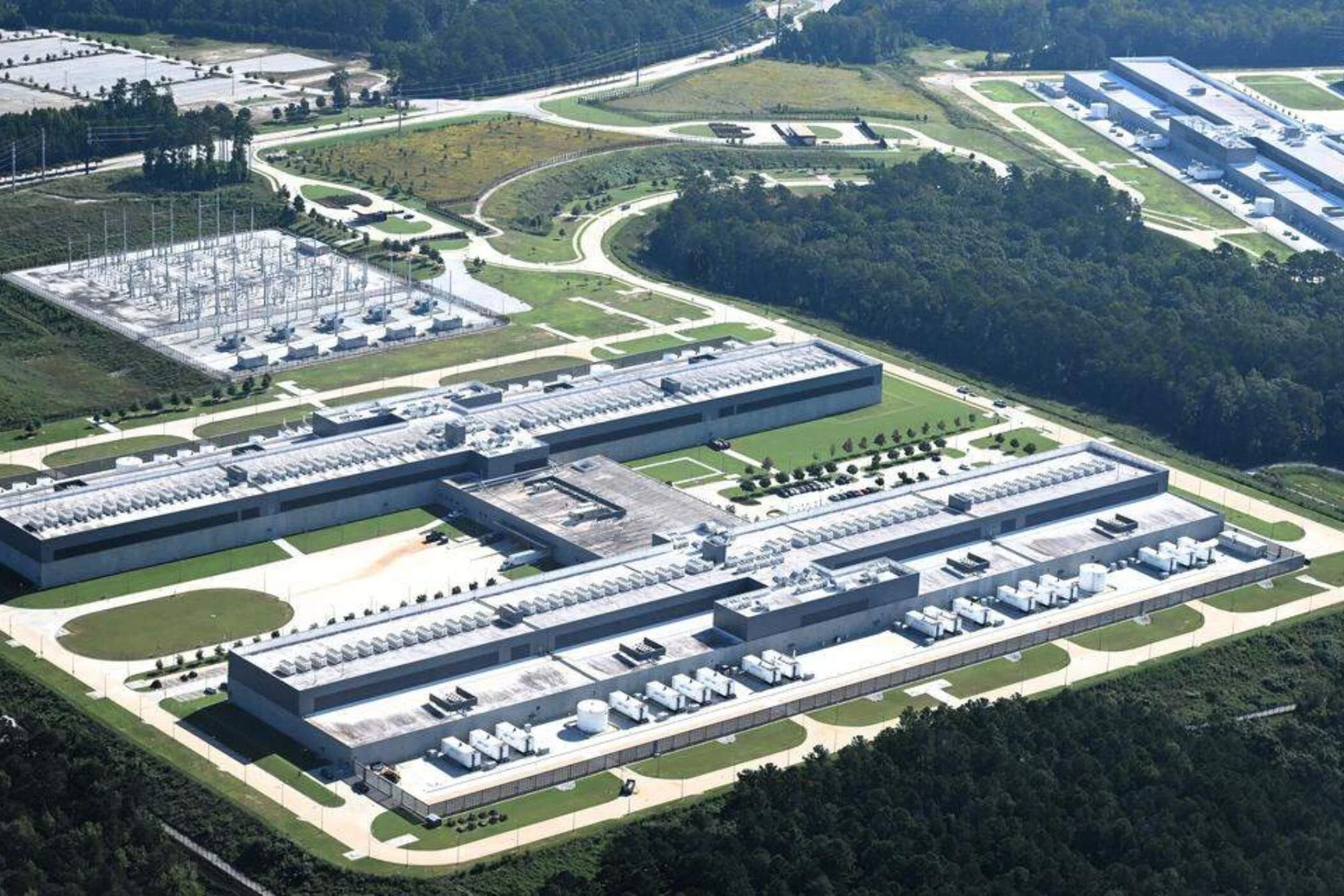
An aerial view of the Meta’s Stanton Springs Data Center on Wednesday, Sept. 3, 2025, in Newton County, Ga.
Credit: GPB/Katie Tucker/The Telegraph
Data Centers Drive Demand, Residents Pay the Cost
Data centers are becoming the backbone of modern technology, powering cloud storage, streaming, AI services, and social media platforms. But they consume electricity on a scale that few ordinary residents can imagine. In the U.S., data centers account for more than 4% of national electricity consumption, with AI-focused centers requiring multiple times the energy of traditional facilities.
Georgia has become a magnet for these facilities. Utilities like Georgia Power have expanded capacity to meet data center demand, approving billions in infrastructure investment, including new transmission lines and power plants. These expansions are primarily funded through residential and small business rates, meaning everyday customers shoulder costs for industrial-scale electricity consumption.
The result is predictable: skyrocketing bills for families who did nothing to increase consumption, alongside legislative battles over who should ultimately pay for the expansion.
Policy Choices vs. Public Accountability
Utilities and regulators claim data centers pay special tariffs, but costs are still indirectly shifted to residents. Georgia’s Public Service Commission has approved rate structures to guarantee power supply for large tech facilities. Critics argue this amounts to subsidizing corporations at the expense of community members.
State lawmakers are considering bills such as Senate Bill 34, which would legally protect households from absorbing infrastructure costs associated with data centers. Without these protections, residents may continue to finance corporate growth without receiving equivalent economic benefits.
While proponents of data center growth argue these facilities create jobs and investment, the scale of energy consumption and the resulting rate increases often outweigh the purported economic benefits, especially for communities already burdened by high living costs.
Environmental and Health Consequences
The cost is not only financial. Data centers also impact public health and the environment. High energy consumption often relies on fossil fuel generation, contributing to air pollution, greenhouse gas emissions, and related health problems. In Atlanta, air quality reports indicate that industrial growth, including data center demand, is linked to worsened respiratory outcomes in historically overburdened Black and low-income communities.
Water use is another concern. Many data centers rely on significant water volumes for cooling, which can stress local supplies and contribute to environmental degradation. This creates disproportionate impacts on surrounding communities, echoing long-standing patterns of environmental injustice.
Why Aren’t U.S. Companies Thinking Outside the Box?
Meanwhile, other countries are innovating to reduce environmental and community burdens. China, for example, is building underwater data centers that use sophisticated water-cooling and recycling systems. These facilities dramatically reduce energy and water waste and limit environmental impact on surrounding communities.
Why isn’t the U.S. following this lead? Instead of designing energy-efficient, environmentally conscious infrastructure, tech companies often prioritize speed and cost-cutting, a pattern similar to challenges businesses face when implementing innovative systems for growth. This leaves communities to absorb the consequences of policy decisions that favor corporate growth over human health and fair pricing.
The Human Cost
Families are paying the price. Residential customers in Georgia report doubling or tripling their bills in recent months despite efforts to minimize energy use. High bills compound financial stress, reduce disposable income, and disproportionately affect marginalized communities that historically bear environmental burdens.
These are policy failures with real human consequences: residents forced to subsidize infrastructure they neither use nor benefit from, while being exposed to additional environmental risks.
What Can Be Done
Legislative Protection: Supporting bills like Georgia’s SB 34 could shift infrastructure costs back to the companies consuming massive amounts of energy.
Public Accountability: Utilities should transparently report the costs of serving industrial clients and how those costs are allocated to residents.
Innovation and Infrastructure Rethink: U.S. tech companies could adopt more sustainable, outside-the-box solutions like underwater cooling systems or renewable-powered microgrids to reduce their footprint.
The surge of data centers and AI infrastructure in the U.S. highlights a critical tension: corporate growth versus public cost and environmental health. Skyrocketing bills, overburdened grids, and environmental risk are not inevitable; they are the result of decisions that prioritize industry over community.
Residents are already paying. It is time for policymakers, regulators, and tech companies to acknowledge the burden and act to alleviate it, rather than leaving households to fund the cost of progress.